
Menu
Close
Close
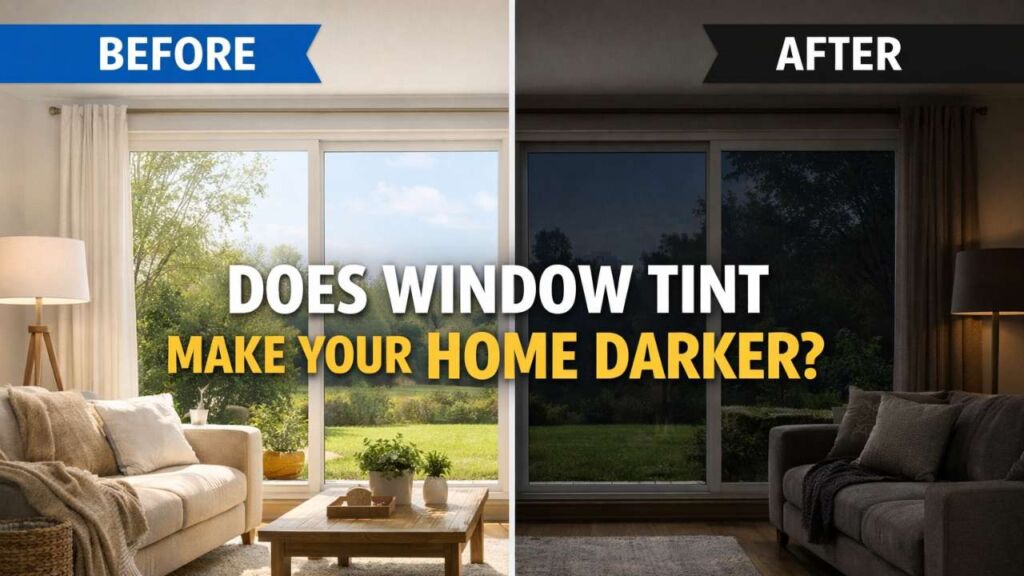
Does window tint make your home too dark? No, not with the right film. Modern high-VLT (Visible Light Transmission) window films block infrared heat and UV radiation without darkening the glass you see through. Darkness only happens when the wrong product is chosen. With ceramic or spectrally selective film rated at 70% VLT or higher, Texas homes stay bright, cool, and comfortable year-round.
If you live in Texas, you already know the problem. The afternoon sun turns your living room into a furnace. But the moment someone mentions window tint, most homeowners say the same thing: “I do not want my house looking like a cave.”
That concern is valid and far more common here than in other states. San Antonio homes often feature large picture windows and open floor plans. Austin modern builds are loaded with floor-to-ceiling glass. Houston homes face punishing heat for nine months of the year. Natural light is part of the lifestyle, and nobody wants to trade heat for darkness.
The right residential window film blocks heat without blocking your view. The key is understanding one number: Visible Light Transmission, or VLT. Choose a product matched to your home, not to your car.
This guide covers which films keep homes bright, which to avoid, and how to choose without guessing.
Texas homes present a challenge that homeowners in cooler climates never face. Large windows are standard in new construction across San Antonio, Austin, and Houston. Open floor plans mean heat from one glass wall radiates across the entire living area. Many Houston homeowners run the AC from March through October.
West and south-facing windows create the worst combination: maximum afternoon glare and maximum solar heat gain when outdoor temperatures peak. Solar heat gain is solar radiation that enters your home as heat, and in Texas, it is the primary driver of high cooling costs. High-performance window film solves that without touching your interior brightness.
Visible Light Transmission (VLT) is the percentage of visible light a film allows through the glass. A 70% VLT film keeps your room nearly as bright as untreated glass. A 50% VLT film is noticeably dimmer but livable. A 20% VLT film belongs in privacy applications, not living areas.
Most homeowners assume residential tint works like car window tint. Auto tint runs low VLT for privacy. Residential film is different. Ceramic window tint rejects heat through infrared blocking rather than by darkening the glass. A ceramic film at 70% VLT can reject 40% to 60% of total solar energy while the glass looks virtually unchanged, because it filters the infrared spectrum that your eyes cannot see.
Ceramic films use non-metallic ceramic particles to block infrared radiation without significantly reducing visible light. A 70% VLT ceramic film rejects up to 60% of solar heat while staying clear and neutral in appearance. Ceramic films carry a low Solar Heat Gain Coefficient (SHGC), the measure of how much total solar heat passes through glass. Lower SHGC means a cooler room without the mirror-like look of older reflective films. Our ceramic window tint options are selected specifically for Texas heat loads.
Spectrally selective films transmit a high percentage of visible light while blocking a disproportionately high percentage of near-infrared and UV radiation, giving you more heat rejection per unit of light lost. These work well for Austin modern homes with large glass walls and are also the preferred choice when existing Low-E glass, factory-applied low-emissivity coatings, is already present.
Light neutral films provide mild glare control with a subtle tint that does not dramatically change the appearance of your glass. These work well for rooms with moderate sun exposure. Visit our residential window tint services page for options matched to your home.
Living rooms are the most common priority. Large windows, constant daily use, and high heat exposure make them the top candidate. West-facing kitchens can become unbearable by 3 PM. Home offices need controlled glare so screens stay readable without closing blinds. Glass-heavy modern homes in Austin’s newer neighborhoods often leave occupants squinting through the afternoon. Nurseries benefit too, staying cooler and UV-filtered without losing soft daylight.
This is the mistake I see most in Texas homes. A homeowner picks a low-VLT film, sometimes a 20% or 35% product from an auto-tint mindset, and wonders why their living room feels like a bunker. That is a product selection problem, not a window tint problem.
Existing Low-E glass already reduces some light transmission. Stacking a dark film on top pushes a room into dim territory no homeowner anticipated. Dark interior finishes like charcoal walls and heavy furniture absorb the remaining light and amplify the effect. The fix is matching film to glass type and room function.
Energy-saving window film separates the solar spectrum into its components. Infrared radiation, which carries heat, can be blocked independently of visible light. This is why ceramic and spectrally selective films change the equation. You get a cooler room, you keep the brightness, and you stop running the AC at full capacity to compensate for heat pouring through unprotected glass.
Consider a typical San Antonio living room with west-facing windows. By 4 PM, glare makes the television unwatchable, and the room temperature climbs several degrees above the rest of the house. Blinds go down. Natural light disappears.
After installing a 70% VLT ceramic film, the same room holds a consistent temperature all afternoon. Glare drops by more than half. The blinds stay open. West-facing windows account for more comfort complaints than any other factor we see in San Antonio homes, and getting the film right there delivers the most noticeable improvement of any upgrade a Texas homeowner can make.
Reducing solar heat gain cuts the cooling load your HVAC system carries during peak Texas afternoons. Fewer run cycles mean lower electricity bills and a longer-lasting system. Energy-saving window film also protects furniture, flooring, and artwork from UV degradation that accumulates over the years of Texas sun exposure. Our lifetime warranty ensures that protection lasts, without sacrificing the daylighting quality that makes your home worth living in.
The auto-tint mentality is the most common error. Homeowners assume residential film works like car window tint: privacy-focused, heavily shaded, low VLT. Highly reflective films create a mirror-like exterior and a noticeably darker interior. Not matching film to existing glass type leads to stacking effects nobody planned for. DIY selection based on product labels alone misses critical details like window orientation, existing coatings, room function, and glass area.
Start with window orientation. West and south-facing windows carry the highest heat load and need higher solar heat gain rejection. East-facing windows need less. North-facing windows rarely need high-performance film. Match film to room function: glare control for home offices, heat control for nurseries, and view clarity for dining rooms. Large glass walls need spectrally selective or ceramic film. Smaller windows often work well with lighter neutral solar films.
Get a professional assessment before committing. The difference between a bright, comfortable result and a dark, regretted one comes down to film selection made with your home’s specific conditions in mind.
Our San Antonio window tinting, Austin window tinting, and Houston window tinting service pages walk through local options matched to your climate and home type.
Modern high-VLT window films reduce heat and glare while keeping homes bright. Films at 70% VLT or higher transmit most visible daylight while blocking infrared heat and UV radiation. Darkness only results from choosing low-VLT films designed for privacy, not from window film as a category.
Film selection is everything. A 70% VLT ceramic film on west-facing San Antonio living room windows makes that room cooler, more comfortable, and fully usable through the afternoon without changing the brightness you designed the space around.
Texas homes need heat protection and natural light. With the right film, those two goals are not in conflict.
At Beat the Heat Window Tinting, we work with San Antonio, Austin, and Houston homeowners to find that balance. We assess your windows, match film to your glass type and room function, and install products that perform for years. Contact us to find out what the right film can do for your home.
No. Window tint affects how much light enters during the day, not how your home feels from inside at night. Interior lighting dominates after dark. High-VLT ceramic films maintain a clear, natural appearance at all hours. Highly reflective films may create a stronger mirror effect after dark, which is another reason ceramic film is preferred for living spaces.
Ceramic films with 70% or higher Visible Light Transmission are the brightest heat-blocking options available for residential use. They reject significant solar heat and block UV radiation while transmitting most visible daylight. Spectrally selective films perform at similarly high VLT levels while delivering superior infrared rejection for large glass areas.
That depends on the VLT rating. A 70% VLT film reduces visible light by 30%, barely noticeable in most rooms. A 50% VLT film produces a mild dimming effect. A 20% VLT film creates a noticeably darker space. For Texas homes where brightness matters, 70% VLT ceramic film is the most common recommendation.
For most living areas, 70% VLT ceramic or spectrally selective film delivers the best combination of heat rejection and brightness. West and south-facing windows in Texas benefit from films with higher solar heat gain rejection at this VLT level. Rooms requiring more privacy or heavier glare control may use 50% VLT. Below 35% VLT is not recommended for primary living spaces.
Yes. High-VLT residential films preserve outward visibility clearly and naturally. The view from inside remains undistorted. Highly reflective films may reduce outward visibility slightly under certain lighting conditions, which is why ceramic and spectrally selective films are preferred for rooms where view quality is a priority.
Yes. Spectrally selective and ceramic films at 70% VLT or above appear nearly clear from both inside and outside while blocking a significant portion of infrared heat and UV radiation. These are the closest available options to invisible heat protection and are well-suited for homes where glass aesthetics are a design consideration.
Minimally. A ceramic film rated at 70% VLT reduces visible light by only 30%, an amount most homeowners find barely noticeable day to day. The heat rejection ceramic film comes from blocking infrared radiation, not visible light. This is why ceramic film is the preferred choice for Texas homeowners who want a cooler home without sacrificing brightness.