
Menu
Close
Close
You’re standing in your bathroom at 7 AM. Sunlight pours through the window facing your neighbor’s deck. You need privacy but hate how blinds block all the natural light. Curtains feel dated. Static tint stays dark all day.
Then you see a video online. Someone flips a switch, and their bathroom window instantly goes from clear to frosted. No blinds. No curtains. Just privacy on demand.
That’s smart window tint. It sounds like science fiction, but it’s real, available now, and growing fast in homes, offices, and even some vehicles.
But here’s what most articles won’t tell you upfront: it’s expensive, it has real limitations, and for many situations, traditional tint or blinds still make more sense.
This guide explains exactly what smart window tinting is, how the different technologies work, where they excel, and when you’re better off with conventional solutions. No hype. Just honest information so you can decide if it fits your actual needs.
Smart window tint film is a laminate applied to glass that alters its optical properties when an electrical current flows through it. The film contains materials that respond to voltage by altering light transmission or opacity.
Unlike regular window tint that stays the same darkness forever, smart-tinted windows respond to commands. Flip a switch, and the window changes from clear to frosted. Flip it back, and it returns to transparent.
The most common type is PDLC film, which switches between clear and frosted states instantly. Other types include electrochromic films that gradually darken like transition sunglasses, and thermochromic films that react to temperature changes.
Smart tinted glass refers to the entire window system, including the glass itself, while smart window film is a retrofit product applied to existing glass. The film costs less but performs similarly in most applications.
This technology works best for specific situations:
Ideal candidates: Bathrooms with windows facing neighbors. Modern homes with glass walls need occasional privacy. Offices with glass conference rooms. Medical facilities require HIPAA-compliant visual privacy. Front doors with glass panels create security concerns.
Poor candidates: Budget-conscious homeowners. Anyone satisfied with curtains or blinds. Spaces without problematic glass exposure.
The key difference from regular tint is control versus performance. Traditional ceramic tint excels at heat rejection and UV blocking. Smart tinting prioritizes adjustable privacy and modern aesthetics.

Most smart window films rely on liquid crystal technology or electrochromic materials suspended in thin layers between conductive coatings.
When power flows through the film, crystals align and allow light to pass clearly. When power stops, crystals scatter randomly and block visibility while still allowing diffused light through.
This is crucial: smart window films don’t darken like traditional tint. They don’t block more light. They scatter it. The window goes from transparent to translucent or opaque, but brightness often stays similar.
Think of it like frosted glass that can turn clear. You still get light. You lose the ability to see through.
Most PDLC systems work in reverse from what you’d expect:
Power ON: Window is clear. You can see normally. Electrical current aligns the liquid crystals into organized formations, allowing direct light transmission.
Power OFF: Window becomes frosted or milky. You cannot see through, but light still passes diffusely. Crystals scatter randomly without electrical organization.
Transition time: PDLC systems switch in under one second. Electrochromic systems take several minutes to fully transition.
Some systems reverse this behavior. Always verify how your specific product operates before installation. Unexpected default states cause problems during power outages.
PDLC stands for Polymer Dispersed Liquid Crystal. This is what most people mean when searching for smart window tint.
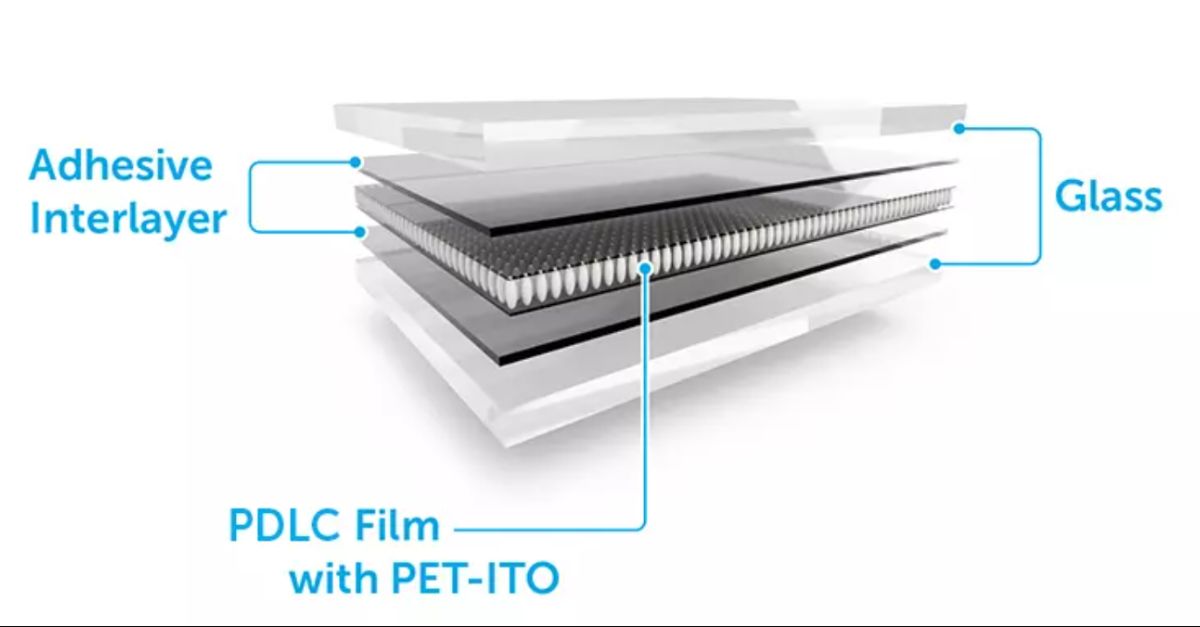
PDLC film consists of liquid crystal droplets suspended in a polymer matrix sandwiched between two transparent conductive layers. Apply voltage and crystals align for transparency. Remove the voltage, and they scatter for privacy.
The result: instant switchable privacy. Clear to frosted in under one second.
The liquid crystals naturally scatter light when relaxed. Electrical current forces them into alignment, creating transparent pathways. Remove current, and they relax back into light-scattering chaos.
Why PDLC windows are privacy-first: The technology blocks visibility by scattering light, not absorbing or reflecting it. Total light transmission stays high even in frosted mode. Heat rejection is minimal compared to ceramic automotive tint.
This matters for buyer expectations. If your primary goal is cooling your space, PDLC smart film won’t deliver the results ceramic tint provides.
PDLC window film is a retrofit product applied to existing glass. Professional installers clean your window, apply the film like a premium tint, then connect it to a power supply and control switch.
PDLC glass has the technology laminated between glass panes during manufacturing. The entire window unit contains switchable functionality. More durable and weather-resistant, but requires full window replacement.
Cost comparison:
PDLC film works on existing windows with minimal structural changes. PDLC glass requires removing old windows and installing new units, involving framing modifications and potentially permits.
For most retrofit applications, film makes more financial sense.
Where PDLC Smart Windows Excel
Bathrooms: Windows facing neighbors need privacy during use, but natural light is valuable. PDLC windows let you have both. Clear when nobody’s home. Frosted when someone showers.
Conference rooms: Transparent walls maintain open office aesthetics. Switch to privacy during meetings. Glass-heavy office designs finally get functional meeting spaces.
Medical facilities: Exam rooms and consultation areas need instant privacy. PDLC provides HIPAA-compliant visual privacy without claustrophobic solid walls.
Interior glass partitions: Modern homes often use glass to separate spaces. You want openness when entertaining, privacy when working from home. PDLC solves this perfectly.
These applications justify the cost because alternatives are either inadequate or more expensive when factoring in aesthetics and flexibility.

Switchable window tinting is a category, not a specific product. This confuses many buyers.
PDLC is one type of switchable smart window film. It’s the most common and most instantly responsive. But other technologies exist under the switchable umbrella.
PDLC (Polymer Dispersed Liquid Crystal): Instant opacity switching. Clear to frosted in under one second. Best for privacy applications.
Electrochromic: Gradual darkening when voltage is applied. Provides actual tinting rather than opacity. Better for light and glare control than instant privacy.
Photochromic: Darkens automatically in response to UV light, like transition eyeglasses. No switches or power required, but no manual control either.
Thermochromic: Responds to temperature changes. Windows darken when hot and clear when cool. Useful for skylights in some climates.
When someone searches for “switchable tint” without specifying technology, they usually mean PDLC because it dominates residential and commercial applications.
Switchable glass film retrofits existing windows. You keep your current glass and add functionality through applied film. Lower cost, faster installation, ideal for existing buildings.
Switchable glass refers to factory-installed systems where the entire window unit includes integrated technology. Higher durability, better weather resistance, but requires full window replacement.
Control methods are identical: wall switches, remote controls, smartphone apps, or smart home automation integration.
When to choose film: Retrofits, rental properties, budget constraints, and preserving existing window frames.
When to choose full glass: New construction, major renovations, maximum durability requirements, and premium aesthetic demands.
Electric window tint is a broad term for any tint system requiring electrical power to function. This includes PDLC, electrochromic, and other powered smart films.
The term doesn’t specify technology. It just indicates that electricity is involved in changing window properties.
Automatic tint windows usually refer to systems with sensors that adjust without user input. Photochromic films darkening in sunlight are automatic. PDLC systems with occupancy sensors are automatic. Standard PDLC with manual switches is electric but not automatic.
Adjustable tinted windows are the broadest term covering any system where tint level or opacity can change, whether manually or automatically controlled.
Electrochromic films gradually darken when voltage is applied, transitioning from clear to various shades of gray or blue over several minutes. They block actual light, not just visibility.
PDLC films switch instantly from clear to frosted, but don’t block significant additional light. They scatter it instead.
Best uses for electrochromic smart film:
Best uses for PDLC:
Why electrochromic dominates skylights: It actually reduces heat gain and glare meaningfully. PDLC doesn’t address these issues effectively. Commercial buildings use electrochromics to reduce HVAC costs. Residential skylights prevent overheating and furniture fading.
The technologies complement rather than compete. Choose based on whether you need privacy control (PDLC) or light and heat control (electrochromic).
Smart glass windows are complete window units with integrated switchable technology. The smart layer is laminated between glass panes during manufacturing.
This differs from smart glass film applied to existing glass surfaces. Full smart glass units provide better durability, weather resistance, and aesthetics but cost significantly more and require full window replacement.
Structural changes might be needed to accommodate different frame sizes. Electrical integration requires running power to each window. Some units need low-voltage transformers. Smart home integration adds complexity and cost.
Critical questions when searching for smart glass windows near me:
Installation requirements: Does it require structural modifications to existing window openings? Frame sizes vary between standard and smart glass units.
Electrical work: What wiring is needed? Running new circuits to windows increases costs. Some systems need dedicated low-voltage wiring.
True total cost: What’s the realistic price including installation, electrical work, and integration? Advertised prices usually cover just the glass unit, not the complete installed system.
Power failure behavior: What happens during outages? Some systems default to clear. Others default to frosted. This affects privacy and security.
Warranty coverage: What’s covered and for how long? Smart glass has more failure points than regular windows. Who handles repairs?
Smart home compatibility: Can the system integrate with existing platforms? Compatibility matters for voice control or automation.
These questions reveal whether an installer understands real-world implementation or just sells the product. Professional installers address these issues upfront.
Electric window tint for home applications solves problems traditional window treatments don’t address well.
Bathrooms with neighbor-facing windows: Get natural light without sacrificing privacy. Clear during empty daytime hours. Frosted when the bathroom is in use. No curtains blocking light or requiring adjustments.
Front doors with glass panels: Glass sidelights create security concerns. You want light in your foyer but not visibility for package thieves checking if anyone’s home. Smart privacy window film provides this perfectly.
Glass walls in open-plan homes: They look stunning but offer zero privacy. PDLC film maintains the aesthetic while adding optional visual separation when needed.
Many homeowners search for smart film for windows near me once they discover this solution exists, but don’t know where to purchase it locally.
Maintenance: Smart film requires minimal upkeep. Clean it like regular windows. No fabric to wash. No mechanical parts to repair. No cords or strings to replace.
Light control differences: Curtains and blinds block light completely when closed. Smart film diffuses light, maintaining brightness while eliminating visibility. You get illumination without exposure.
Design impact: Clean glass looks better than curtains or blinds in contemporary spaces. Smart film maintains that clean aesthetic while adding functionality.
The cost tradeoff: Curtains cost $50 to $500 per window. Blinds cost $30 to $300. Smart film costs $500 to $2000 per window installed. You’re paying a significant premium for aesthetics and convenience.
For design-conscious homeowners with specific privacy challenges, that premium makes sense. For budget-focused buyers, traditional treatments remain practical.
If you’re interested in exploring professional installation for your home, our window tinting services cover both traditional and smart film solutions.
Smart film for office applications centers on flexible space utilization and modern workplace design.
Conference rooms: Glass-walled offices need privacy during meetings while maintaining open aesthetics when empty. PDLC eliminates the need for outdated blinds or temporary coverings.
Medical compliance: Visual privacy for patient areas is legally required. PDLC provides HIPAA-compliant privacy while maintaining a modern facility appearance. Traditional curtains look dated and collect dust.
Retail visibility control: Stores can display window merchandise while having options for back-area privacy or after-hours security.
Privacy regulations: HIPAA, GDPR, and other regulations create legal requirements for visual privacy in certain settings. Switchable smart film provides instant compliance without architectural changes.
Modern office design: Contemporary workplaces emphasize glass for openness and natural light. This creates conflicting privacy needs. Smart film resolves the conflict without reverting to cubicles and solid walls.
Client-facing environments: Professional services firms use PDLC to signal innovation while meeting functional privacy needs. Law firms, consulting agencies, and financial advisors benefit from the technology’s modern impression.
Commercial applications justify costs more easily than residential ones because businesses can amortize over years and often have stricter privacy requirements that traditional solutions don’t fully address.
For businesses considering installation, our commercial window tinting services include both traditional performance films and smart switchable systems.

Smart privacy window film in daily life feels surprisingly normal after the novelty wears off.
You flip a switch like turning on lights. The window changes. You go about your business. It becomes routine within days.
Tint control windows work simply: you decide when you need privacy and when you don’t. Morning bathroom use requires privacy. An empty house during the day doesn’t. You control it moment by moment.
Light levels stay high: People assume frosted means dark. It doesn’t. Rooms stay bright in privacy mode, just blurred. This surprises buyers expecting dimming.
Electrical maintenance: Smart film rarely fails, but when it does, repairs require specialized knowledge. You can’t just replace it yourself like blinds.
Power dependency: Most systems default to either clear or frosted when power cuts. If yours defaults to clear and you lose power during a shower, that’s awkward. Understand your system’s default state.
Usage patterns: Many buyers use the control feature less than expected. The novelty fades. If you rarely adjust settings after the first month, you’ve paid premium prices for functionality you don’t use.
These aren’t dealbreakers. They’re realities to consider before investing thousands in smart window technology.
Switchable glass film cost ranges from $50 to $100 per square foot for material and professional installation. A typical bathroom window might run $500 to $1500 installed, depending on size.
The cost of switchable privacy glass units (full replacement windows) runs $100 to $200+ per square foot. That same bathroom window could cost $2000 to $4000 as a complete window replacement with integrated smart glass.
Window size: Larger windows need more material and installation time. A 10-square-foot window costs substantially less per square foot than a 50-square-foot glass wall.
Glass type: Flat glass is straightforward for film application. Curved or textured glass complicates installation and increases labor costs.
Control systems: Basic wall switches are inexpensive. Smartphone app integration costs more. Full home automation integration costs significantly more.
Installation complexity: Ground-floor accessible windows cost less than second-story installations requiring scaffolding or lifts.
Geographic location: Labor rates and specialist availability vary by region. Urban areas typically have more experienced installers.
Most online quotes show material-only prices. Realistic installed costs run 50 to 100 percent higher once you factor in electrical work, labor, and control systems.
For accurate pricing on your specific project, a professional assessment is essential. Contact us for a detailed quote on smart film or traditional tinting solutions.
Instant privacy control without curtains or blinds. Maintain natural light without visibility. Modern aesthetic that impresses. Solves specific privacy problems that traditional solutions don’t address well.
Perfect for glass-heavy modern architecture. Enhances property value with premium technology. Reduces visual clutter from window treatments.
Expensive compared to alternatives. Minimal heat rejection versus ceramic tint. Requires electrical power and professional installation. Repairs need specialists and can be costly. Doesn’t address all the problems regular performance tint solves.
Technology dependency creates potential failure points. Higher initial investment with a longer payback period.
If curtains or blinds work fine for you, SmartTint is an expensive solution to a problem you don’t have. Many buyers regret the expense after realizing they rarely use the control feature beyond the first few weeks.
Budget-conscious homeowners get better value from traditional solutions. Renters can’t justify the investment for temporary living situations.
Smart film rarely fails, but it isn’t maintenance-free. Electrical connections can corrode over time. Control systems need occasional battery replacements. App-controlled systems might require software updates.
Power outages reveal dependency issues. Most PDLC systems default to frosted without power, which might not suit your needs during outages.
Damaged smart film usually requires complete section replacement. Unlike regular tint that can sometimes be patched, smart film’s electrical components make repairs impractical. Plan for potential replacement costs.
Homeowners with privacy problems, curtains don’t solve well. Bathrooms with neighbor-facing windows. Modern homes with extensive glass walls. Anyone remodeling and willing to invest in premium features.
Business owners with glass conference rooms. Medical facilities need flexible HIPAA-compliant privacy. Professional services firms want to project modern innovation.
Anyone who values aesthetics enough to pay premium prices. Smart film looks cleaner than window treatments in contemporary spaces. If design matters significantly and budget allows, it’s worth considering.
Budget-conscious buyers will find traditional solutions more practical. The cost differential is too large to ignore for most households.
Anyone uncomfortable with technology dependency should stick with mechanical window coverings. Power failures and electrical issues create complications that simple curtains avoid.
Renters and short-term occupants can’t justify the investment for temporary living situations.
Smart film should last 10 to 15 years with proper care. A $1500 bathroom installation costs $100 to $150 per year amortized over its lifetime. Compare this to replacing $200 blinds every few years.
Consider your home’s resale value. Smart windows are a premium feature that some buyers appreciate. Others won’t care. Don’t expect full cost recovery when selling.
The decision ultimately depends on whether you have specific problems smart tint solves and whether your budget allows premium solutions.
Smart window tint solves specific problems beautifully. If you have glass-heavy spaces with privacy challenges that curtains don’t address satisfactorily, it’s worth serious consideration.
Where it excels: Bathrooms with neighbor-facing windows. Glass-walled conference rooms. Medical facilities. Modern homes with extensive glass. Front doors with glass panels. Any application where adjustable privacy without mechanical coverings provides real value.
The technology works reliably and delivers on its core promise: instant privacy control with clean modern aesthetics.
Where traditional solutions win: Most automotive applications where heat rejection matters. Budget-conscious homes. Spaces where curtains or blinds work fine. Situations without problematic glass exposure.
Ceramic tint dramatically outperforms smart tint for thermal control in vehicles. Curtains and blinds cost a fraction of smart film for residential privacy needs.
Think carefully about whether you have a problem that Smart Tint actually solves. Don’t buy it because it’s impressive technology. Buy it because you have glass creating specific privacy or aesthetic challenges that traditional solutions don’t address satisfactorily.
For those specific situations, smart window tint is absolutely worth the investment. The convenience and aesthetic improvement justify the premium cost.
For everyone else, traditional solutions deliver better value.
Ready to explore your options? Whether you need smart film technology or proven ceramic tint performance, a professional assessment helps determine the right solution for your specific needs.
At Beat The Heat Window Tinting, our team helps you compare smart window tint installation with traditional performance ceramic films, so you can choose what actually works for your space. Schedule a consultation to evaluate your windows and receive accurate pricing based on real conditions, not assumptions.
Smart window tint represents the future of privacy control, but the future is not right for everyone yet. Choose based on your actual needs, not technology trends.
Quality PDLC film lasts 10 to 15 years with proper care. Electronic systems last 15 to 20 years. Lifespan depends on usage frequency, environmental exposure, and installation quality.
No. PDLC films provide only 10 to 20 percent heat rejection. Electrochromic blocks more as it darkens, but still underperforms compared to ceramic tint. Heat rejection is not Smart Tint's primary function.
Yes. Smart film retrofits existing glass without window replacement, making it accessible for most applications. This is the most cost-effective approach for adding smart tint functionality.
It defaults to its unpowered state. Most PDLC systems go frosted without power. Electrochromic systems usually maintain their last state until power returns. Verify your specific product's behavior before installation.
Many systems offer smartphone app control and smart home integration through platforms like Alexa, Google Home, or Apple HomeKit. This typically costs extra beyond basic switch control. Verify compatibility with your existing systems.
Smart glass offers superior durability and weather resistance. Smart film costs less and works with existing windows. Choose based on whether you're building new (glass) or retrofitting existing windows (film). Both perform similarly functionally.
Opaque, not dark. PDLC scatters light rather than blocking it. Windows go frosted, not tinted. Light levels stay relatively high even in privacy mode. This distinction matters for expectations.
PDLC switches in under one second, essentially instantaneous. Electrochromic takes several minutes to fully transition between states. Speed depends on the technology type.
Rarely. Damage usually requires replacing the entire affected section. Unlike regular tint, which can sometimes be patched, smart film's electrical components make localized repairs impractical. Factor replacement costs into long-term budgeting.