
Menu
Close
Close
Sunlight is a major asset in retail design, but it is also a hidden source of damage. Large storefront windows attract attention and highlight products, yet the same sunlight slowly works against the displays it is meant to showcase.
Retailers often see the effects before they understand the cause. Products near windows fade faster, signage loses contrast, and mannequins look washed out under uneven light. Because this happens gradually, it is easy to dismiss it as normal wear or product rotation.
Storefront glass serves two purposes. It draws customers in, but it also allows constant exposure to ultraviolet light. Unlike heat, UV damage goes unnoticed until fading becomes visible and the inventory value is already lost.
This article explains how sunlight affects retail displays, why UV exposure causes fading, and how window film protects merchandise without blocking natural light or storefront visibility.
Retail stores are exposed to sunlight in ways most other commercial spaces are not. Storefront glass is designed to be open and highly visible, allowing more direct sunlight into the space throughout the day. Large display windows, clear glass, and minimal shading all increase exposure, especially in stores that face east or west.
Unlike offices, retail spaces experience long, uninterrupted periods of sunlight. Offices often have interior layouts or window treatments that limit exposure. Retail stores rely on their windows to attract customers, so covering them is rarely an option. As a result, sunlight reaches the same display areas day after day, often for eight to ten hours at a time.
This is why products placed near windows fade faster than items deeper inside the store. Mannequins, feature displays, signage, and front-facing shelves absorb more UV exposure simply because of their location. Over time, colors lose vibrancy, packaging looks dull, and materials begin to break down unevenly.
It is also important to separate heat damage from UV damage. Heat affects comfort, but ultraviolet rays cause most fading. UV light penetrates glass even when the store feels cool, which is why products can fade in bright but mild conditions.

Sunlight causes fading primarily through ultraviolet radiation. UV rays pass through standard storefront glass and break down the chemical bonds that give color to fabrics, packaging, plastics, and printed materials. This weakens pigments at a molecular level, causing colors to lose intensity over time.
Fading happens slowly, which makes it easy to overlook. Staff see the same displays every day, so small changes go unnoticed. By the time fading becomes clear, merchandise has already lost visual appeal and value.
Items most affected include clothing, shoes, cosmetics, printed displays, and promotional materials. These products often require early replacement or discounting once fading becomes visible.
Managing UV exposure at the glass level is the only consistent way to slow this process.
Glare is often mistaken for brightness, but it has the opposite effect. Direct sunlight reflecting off glass and interior surfaces reduces contrast and makes products harder to see. Displays lose detail, and signage becomes difficult to read.
Customers feel this discomfort immediately near storefront windows. Bright reflections cause eye strain, leading shoppers to avoid those areas. Over time, prime display space becomes underused.
Glare also interferes with color accuracy. Whites appear harsh, darker colors lose depth, and subtle differences disappear. This affects perceived product quality and weakens visual merchandising.
Reducing glare helps restore clarity, comfort, and color consistency throughout the day.
Curtains and shades block sunlight, but they also block visibility. Covered storefront windows reduce foot traffic, hide displays, and make stores appear closed.
They also require constant adjustment. One employee lowers them, another forgets to raise them, and displays change hour by hour. Maintenance issues add another layer of inconsistency.
There is an unavoidable trade-off. Blocking sunlight protects products but removes natural light. Leaving windows uncovered preserves visibility but exposes merchandise to damage. This is why coverings rarely work as a long-term retail solution.
Window film works at the glass level, filtering harmful sunlight while allowing natural daylight to pass through. This makes commercial window film solutions ideal for retail storefronts where protection and visibility must work together.
High-quality film blocks a large percentage of UV rays without darkening the store. Displays remain visible from outside, and the interior stays bright and inviting.
Glare is reduced in a controlled way, making products easier to see and storefront areas more comfortable for customers and staff.
By limiting UV exposure, window film helps preserve product color, signage, and promotional materials. This reduces early markdowns and replacement costs.
Designed to prevent fading, UV protection window film blocks ultraviolet radiation while maintaining high light transmission. It works well for boutiques and stores with sensitive displays near windows.
Solar control film reduces heat and glare while still offering UV protection. Many retailers use solar control window film for storefront glass when comfort and fading prevention are both concerns.
Low-reflective films minimize mirror-like reflections and preserve display clarity. They are ideal for high-end retail environments that rely on storefront window film for clear displays.
Smart window film is generally not used for retail storefronts because constant visibility is essential.
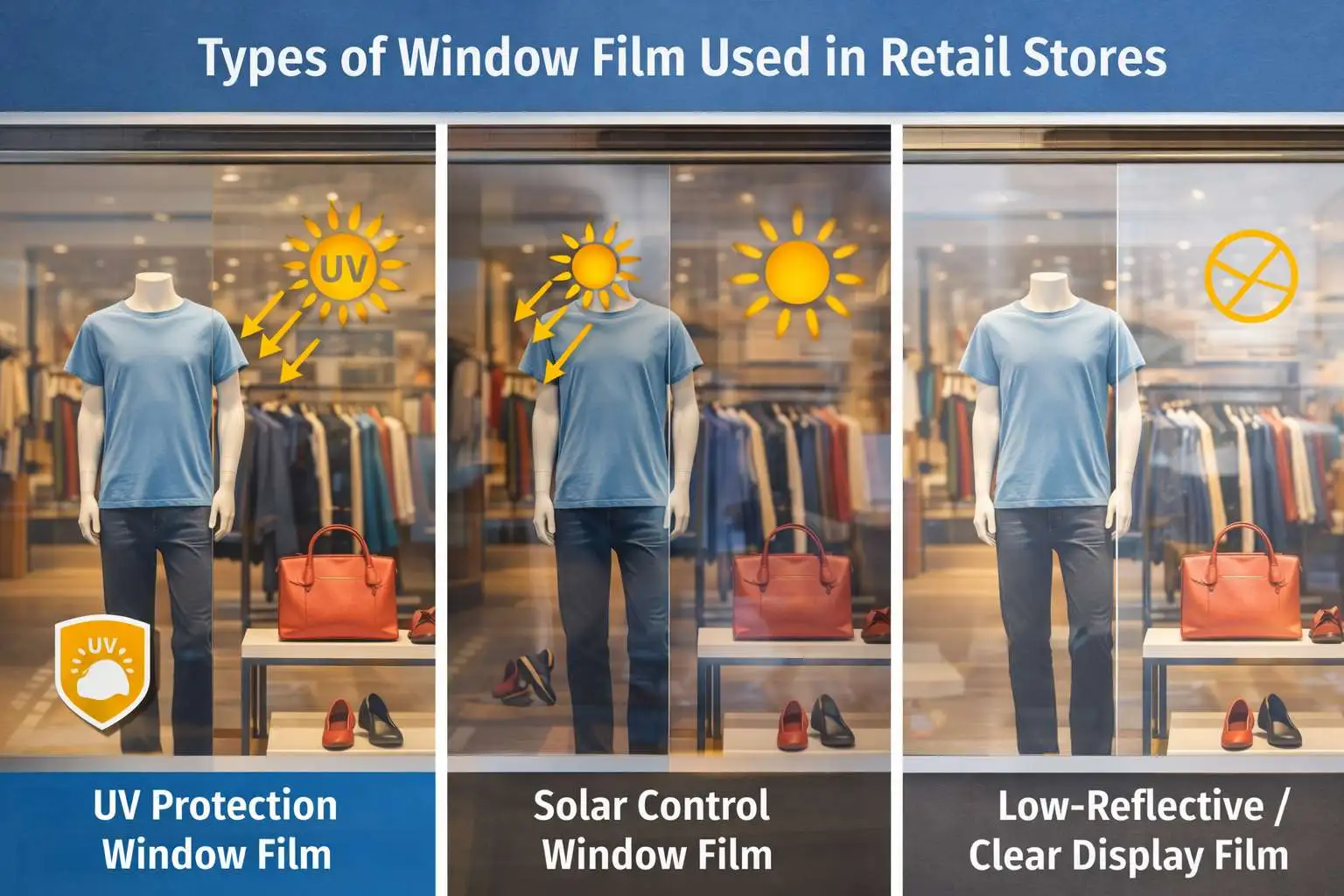
Film selection depends on sunlight exposure, merchandise sensitivity, storefront visibility, and brand image. Stores with strong sun exposure or sensitive products should prioritize UV protection.
Visibility should never be compromised. Clear or low-reflective options used in retail storefront window tinting protect displays without making the store look shaded or closed.
The right film supports your brand rather than changing how the storefront appears.
One of the most common mistakes retailers make is choosing a dark tint that hides displays. Darker films may seem effective against sunlight, but they often reduce visibility and make storefronts feel closed, which can discourage foot traffic.
Another issue is focusing only on heat reduction while ignoring UV protection. Heat affects comfort, but ultraviolet rays are the main cause of fading. A film that lowers temperature without blocking UV can still allow merchandise and signage to deteriorate over time.
Some retailers also install residential-grade window film in commercial storefronts. These films are not designed for large glass panels or constant sun exposure and may wear out faster or create unwanted reflections.
Treating all storefronts the same is another common mistake. Sun exposure, product placement, and visibility needs vary by location. Using a one-size-fits-all approach often leads to uneven results and missed protection opportunities.
Avoiding these mistakes helps window film support both display protection and storefront performance.
Installation plays a major role in how well window film performs in retail spaces. Storefronts often use large glass panels, so seams, edges, and alignment must be handled carefully. Poor placement can distract from displays and affect the clean look retailers expect.
Interior installation is more common because it protects the film from the weather and reduces maintenance. In some cases, exterior installation may be needed based on glass type or sun exposure. The right approach depends on the storefront design and lighting conditions.
Store hours also matter. Installation must be planned to avoid disrupting customers, often by working during off-hours.
Professional assessment is essential. Glass type, orientation, display layout, and merchandise sensitivity all influence film performance. Proper installation ensures consistent results without compromising storefront appearance.

Retail stores in Texas face stronger and more consistent sun exposure than many other regions. Cities like San Antonio, Austin, and Houston experience long hours of intense sunlight for much of the year, increasing the risk of fading and glare in storefront spaces. Large glass fronts amplify this exposure, especially during peak daylight hours.
Seasonal sun angles also matter. Higher summer sun increases UV intensity, while lower angles in fall and winter allow sunlight to reach deeper into the store. Displays that seem protected one season may be exposed the next, leading to uneven fading over time.
Heat and UV intensity are different, but both affect retail environments. Even when temperatures feel comfortable, UV radiation can still damage merchandise and signage, making UV protection essential year-round.
Regional experience plays an important role. Understanding Texas sunlight patterns, common storefront glass types, and seasonal exposure changes helps ensure window film performs consistently over time.
Window film helps maintain consistent product presentation, which directly supports retail branding. By reducing UV exposure and glare, merchandise near storefront windows keeps its original color and appearance, helping displays look polished and reliable throughout the day.
Controlled light improves window displays by preventing them from looking sharp in the morning and washed out later in the day. Signage stays readable, colors remain accurate, and featured products continue to stand out.
Customer comfort also improves. Reduced glare and hot spots encourage shoppers to spend more time near the storefront instead of avoiding those areas, which supports better engagement with front-of-store displays.
Most importantly, window film protects displays without requiring changes to the store design. It preserves natural light while quietly supporting long-term display protection and brand presentation.
Protecting retail displays comes down to managing three connected factors: UV exposure, glare, and visibility. Uncontrolled sunlight fades merchandise, washes out signage, and creates uncomfortable hot spots near storefront windows. When these issues are addressed at the glass level, displays stay clear, colors remain accurate, and storefronts continue to attract attention.
Window film provides a long-term solution because it works continuously without changing daily store operations. It protects merchandise without blocking natural light, covering windows, or altering display layouts, and it does so without ongoing adjustments or maintenance.
Choosing between clear and solar control film depends on the store’s needs. Clear UV-blocking films work best when visibility and product protection are the priority. Solar control films make more sense when glare and heat also affect comfort. The right choice balances all three factors without overcorrecting any one of them.
An informed approach makes the difference. By understanding how sunlight affects retail spaces and the various functions of different window films, store owners can effectively protect displays without compromising visibility or brand presentation.
For retailers looking to protect storefront displays without sacrificing visibility, Beat The Heat Window Tinting works with businesses to apply window film solutions that balance UV protection, glare reduction, and clear presentation.
Need a free Quote? Don't Wait, call Now!
Most commercial-grade retail window films block up to 99% of harmful UV rays, which are the main cause of fading. While no solution can reverse existing damage, high-quality window film significantly slows future fading and protects merchandise, signage, and displays near storefront glass.
When the right film is selected, storefront visibility remains clear. Many retail films are designed to be low-reflective or nearly invisible, so customers can still see displays clearly from the sidewalk. The goal is protection without making the store look dark, mirrored, or closed.
Yes. UV blocking and clear display films are specifically made to protect merchandise while maintaining high light transmission. These films filter harmful radiation without reducing natural daylight, allowing stores to stay bright and inviting.
Retail window film is a long-term solution. Depending on the film type and installation conditions, it typically lasts 10 to 15 years or more. Interior installations often last longer because they are protected from the weather and environmental wear.
Yes. Window film is not permanent. It can be professionally removed or replaced if store layouts change, branding updates are needed, or different performance requirements arise in the future.